
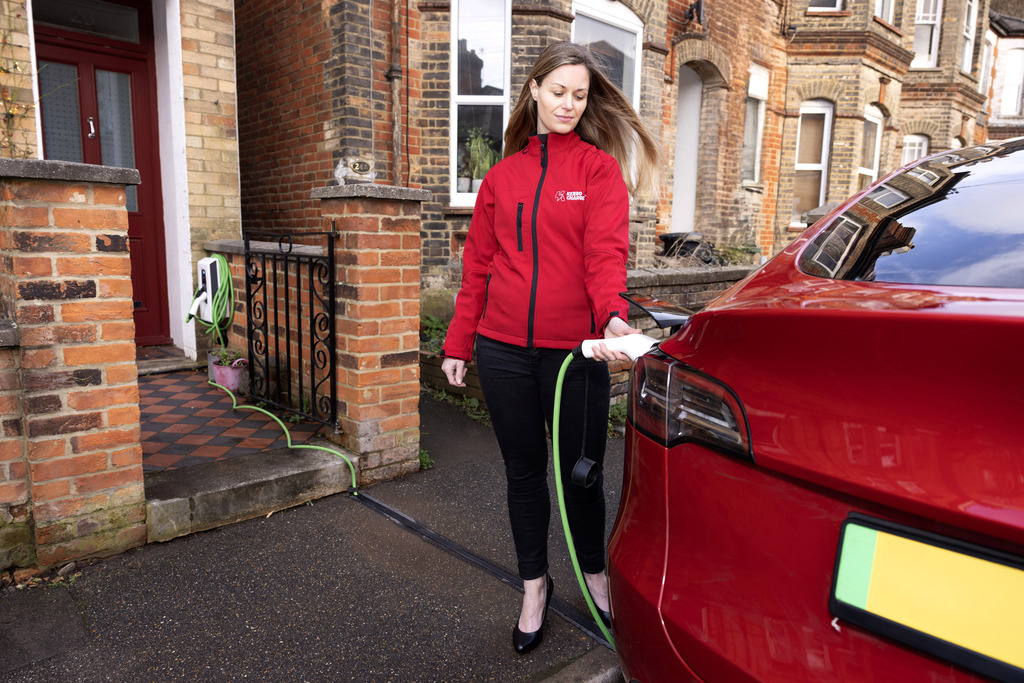
Driving equitable EV charging: Street-friendly cross-pavement solutions for all
As Co-founder and CTO of Kerbo Charge, Ben Whitaker is on a mission to make home EV charging accessible to the millions of UK households without driveways. With cross-pavement charging now deployed by more than 38 top-tier local authorities, Kerbo Charge has become the most widely adopted solution of its kind, helping residents access affordable, convenient home charging without adding street clutter.
 Speaking at the UK Charging Infrastructure Symposium, Ben (pictured left) will share practical lessons from real-world deployments of Kerbo Charge’s cross-pavement system. His session, Integrating cross-pavement charging into local streetscapes: Best practice from real-time deployments, will explore accessibility considerations, resident engagement, maintenance planning and how curbside solutions can complement wider public charging strategies.
Your presentation focuses on cross-pavement charging. Why is this becoming increasingly important for EV adoption in the UK?
“Although driving an EV is cheap and convenient for those with driveways, 40% of UK households and 70% of commercial fleet drivers do not have a driveway and, until recently, had no choice but to pay five to ten times more for less convenient public chargers.
“Cross-pavement chargers finally open up cheap and convenient home charging to terraced houses and ground-floor flats, if residents can park in one of the three spaces closest to their channel once or twice a week, as is necessary for the average driver. Of course, it will not work in every situation, such as areas where you can never park anywhere near your home. However, many residents can use them – and that’s what we are supporting local authorities to offer.”
What key lessons have you learned from real-world deployments?
“Kerbo Charge is now being installed by more than 38 tier-one local authorities, making it by far the most widely deployed cross-pavement solution (XPS). This has given us many learnings about the installation process, application process and customer feedback.
“From real-world installation feedback, we changed the installation materials to flexible anti-slip ones that can cope with pavement parking and vehicles driving over the channels, as early brittle materials failed when driven over. We ensured the channel is recessed from the kerbstone bullnose to prevent interactions with car tyres being scraped along the kerb, increased the channel load rating to C250 (25 tonnes per tyre), and created an easily replaceable lid and hinge in case of damage or vandalism. We also developed an accessibility tool for those who do not want to, or cannot, bend down to insert the cable, following earlier Motability feedback that XPS was not very accessible. In addition, we introduced coloured channels to blend in with decorative paving and offered a lockable lid that can be swapped in if a resident moves out or breaks the terms of use.
“Residents told us the application process was cumbersome and off-putting. They found it difficult having to apply to the county council for a channel and then again to the district planning team for the charger, with no guarantee both applications would be approved. Some council officers also noted that manually handling applications and resident communications drained their time.
“In response, we added a fully managed service for local authorities that do not want the hassle, insurance or maintenance liability. We created Kerbo Klik, an end-to-end online tool for managing resident applications, producing installation sketches, issuing permits, collecting signatures and safety documentation, scheduling installs and managing future maintenance or resident changes. We have also lobbied for planning law changes to secure Permitted Development rights for chargers installed alongside a highways-approved channel installation, which we hope will arrive during 2026.”
How does cross-pavement charging reduce street clutter?
“Because the Kerbo Charge channel is flush with the pavement surface, blends with the surrounding colours, and allows the cable to exit through the face of the kerbstone, it does not reduce the accessible width of the footway or add street clutter such as bollards or lamp-post chargers.
“This is particularly beneficial for new-build areas where many homes may not yet need charging, avoiding unnecessary infrastructure on posts. It also avoids potential maintenance issues if chargers are reversed into and damage the footway. Kerbo Charge channels are successfully fitted in areas where they are driven over every day with no ill effect.”
What approaches have proven most effective in gaining community buy-in?
“So far, there have been no negative community reactions reported from channel installations. Some residents share their channels with others in the area, creating a community resource for cheaper, more convenient charging. We hope to promote more charger sharing as installations become more widespread. Councils often find that once one channel is installed, a cluster of new requests follows from nearby residents who have seen it.”
What should local authorities plan for in terms of maintenance?
“Some councils accept channel maintenance as part of business-as-usual footway maintenance. Others charge an annual fee of around £50 per year from year three, while some request that Kerbo Charge provide a managed service including future maintenance and reinstatement, for which we charge residents a monthly fee from year three onwards.”
How does cross-pavement charging complement public networks?
“We believe demand for residential charging will far outstrip the number of public chargers it is practical to install. Wherever a resident can use their own home charger, it reduces pressure on public chargers for those who have no choice but to rely on them.”
What practical insights will delegates gain from your session?
“We will discuss feedback from our resident survey, which received over 2,000 responses, as well as findings from installing channels with more than 38 local authorities that councils can use when creating their own strategies. This is particularly timely, as over 80% of local authorities applied for the cross-pavement XPS grant and will be rolling out their own programmes soon.”
Anything else you would like to add?
“As the Office for Zero Emission Vehicles (OZEV) said, ‘2026 is the year of the gulley’, when it moves from pilot to business as usual, and from experiment to something ordinary. Resident demand is high, and the technology and services are now in place to open fair, equitable and convenient charging to terraced home dwellers – the people we most want to see driving clean vehicles in our smoggy towns and city centres. It would be great for local authorities to learn from the many council rollouts to date and incorporate those experiences into their own programmes.”
The UK Charging Infrastructure Symposium will take place on 4-5 March 2026 at the British Motor Museum. Book your delegate pass today by clicking here.